Brazilian Soybean Export Figures: World Market Study for 2025
- Sep 28, 2026
- 246 Views
Brazilian Soybean Export Figures: World Market Study for 2025
With its large-scale agricultural land, increasing production capabilities, well-established export process, and the demand for its products from other countries, Brazil has become one of the leading soybean-exporting nations. Soybeans have achieved considerable importance in the list of agricultural export commodities, and they play an important role in the country’s foreign-exchange earnings.
According to the official aggregated information on Brazil Trade Data, around 108.2 million tons of soybeans were shipped overseas in 2025, while the export receipts were approximately US$43.54 billion. Thus, the export volume has increased by around 9.5% compared to 2024, and the value has grown by 1.4%. The average export price was around US$402.4 per ton.
Brazil Soybean Export Data is an important source for traders, importers, agriculture companies, processors, distributors, and investors to analyse foreign buyers, suppliers, volume of shipments, type of products, destinations, and tendencies in the market.
Importance of Brazil in the Global Soybean Market
Brazil holds a vital status within the context of the global soybean market. The country's soybean sector has witnessed significant developments over decades; owing to which Brazil now ranks as one of the largest suppliers of soybeans and soybean products on a global scale.
According to Brazil Shipments Data, the country has produced around 169 million tons of soybeans in the 2025, which corresponds to roughly 40% of total world soybean production. Notably, Brazil's output outweighed the US one, as shown by the same Brazil Trade Statistics.
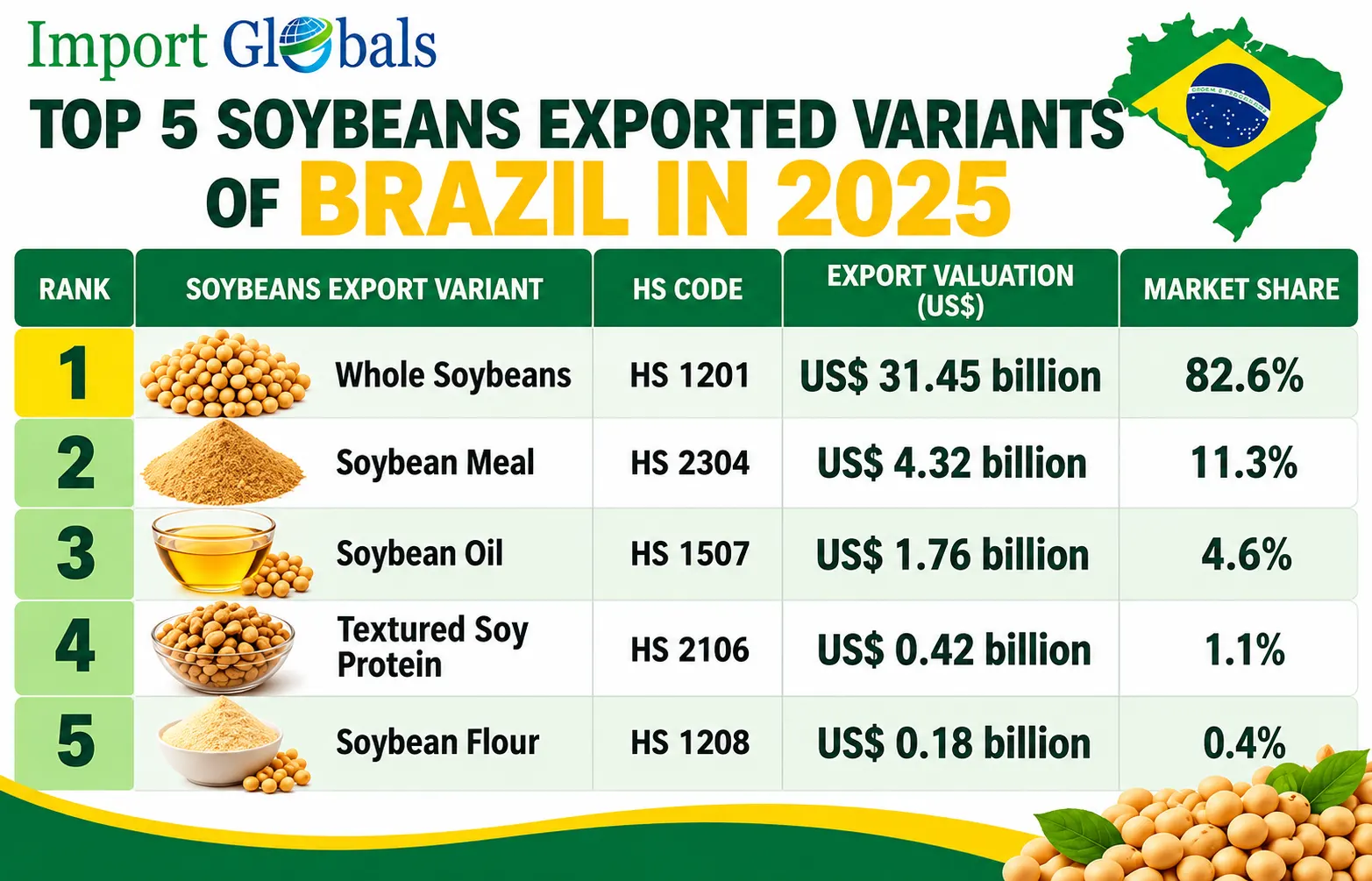
The system of Brazil's soybean exports involves the following groups:
- Soybeans
- Soybean meal
- Soybean oil
- Soybean products
- Animal feed
- Vegetable oil
- Biodiesel soybean products
Moreover, the soybean business is linked to the other segments of Brazil's agriculture, such as livestock, food processing, and biofuel. The significance of Brazil goes beyond supplying raw soybeans, as the processing and crushing of soybeans in Brazil creates increased demand for soybean products.
Statistics of Brazil Soybean Exports: A Look at the Global Market
The 2025 Brazilian soy export statistics have shown the highest-ever volumes of shipments achieved in history.
As per the country’s official statistics:
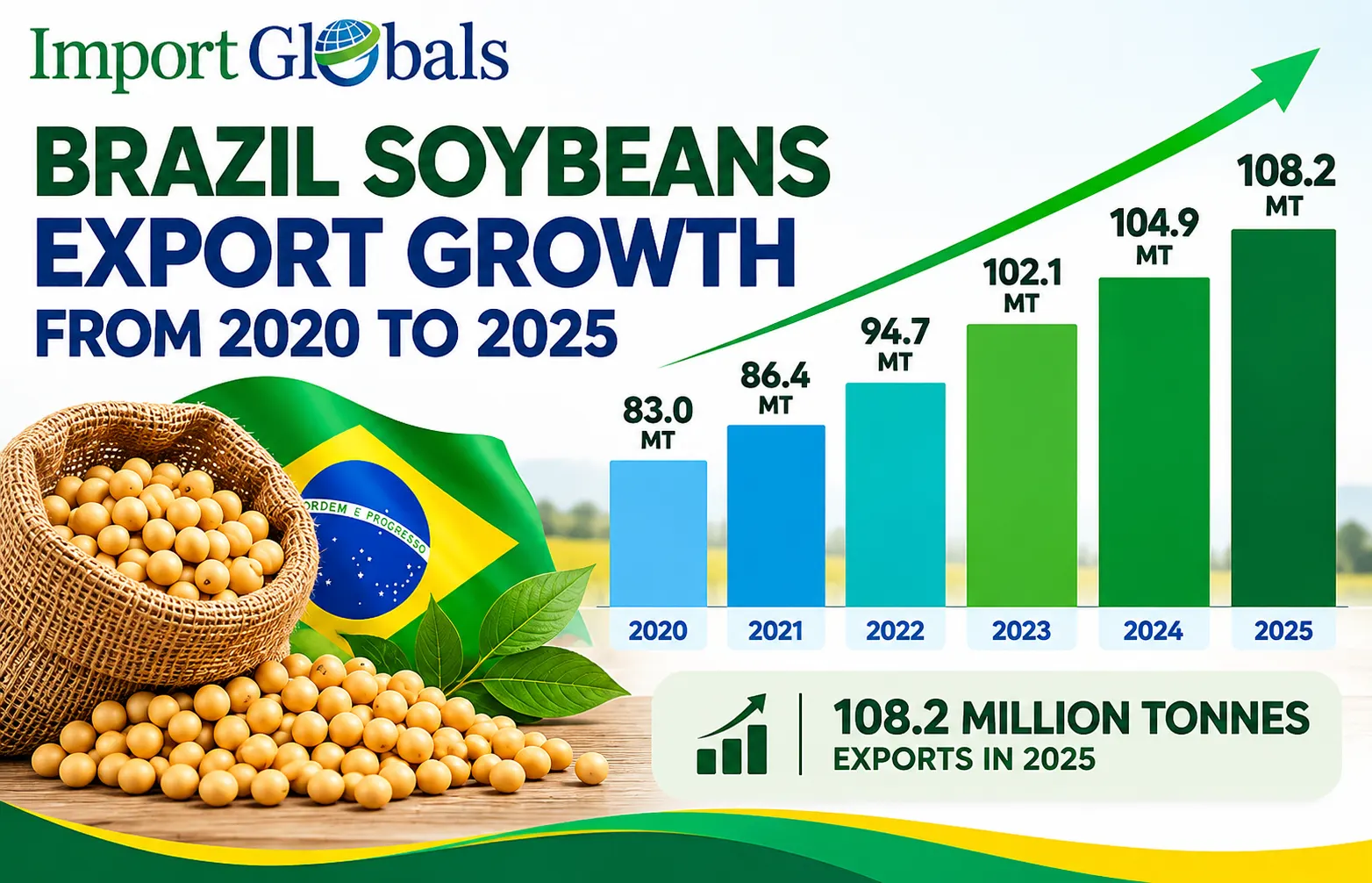
- Volume of exports: 108.2 million metric tons.
- Value of exports: USD 43.54 billion.
- Export volume growth year-on-year: 9.5%.
- Export value growth on year: 1.4%.
- Average export price: USD 402.4 per metric ton.
Among Brazil’s total exports in value terms, the share of soy exports is approximately 12.5%.
Long-term trends also show the trend in Brazilian soy exports. Soy export volumes have increased from approximately 83.0 million metric tons in 2020 to 108.2 million metric tons in 2025. In turn, export revenues have risen from approximately USD 28.56 billion in 2020 to USD 43.54 billion in 2025, reported Brazil Customs Data. Thus, 2025 results represent strong physical export performance as well as the importance of soy export in Brazil’s overall foreign trade.
Top 5 Markets Advantageous for Brazilian Soybeans in the Year 2025
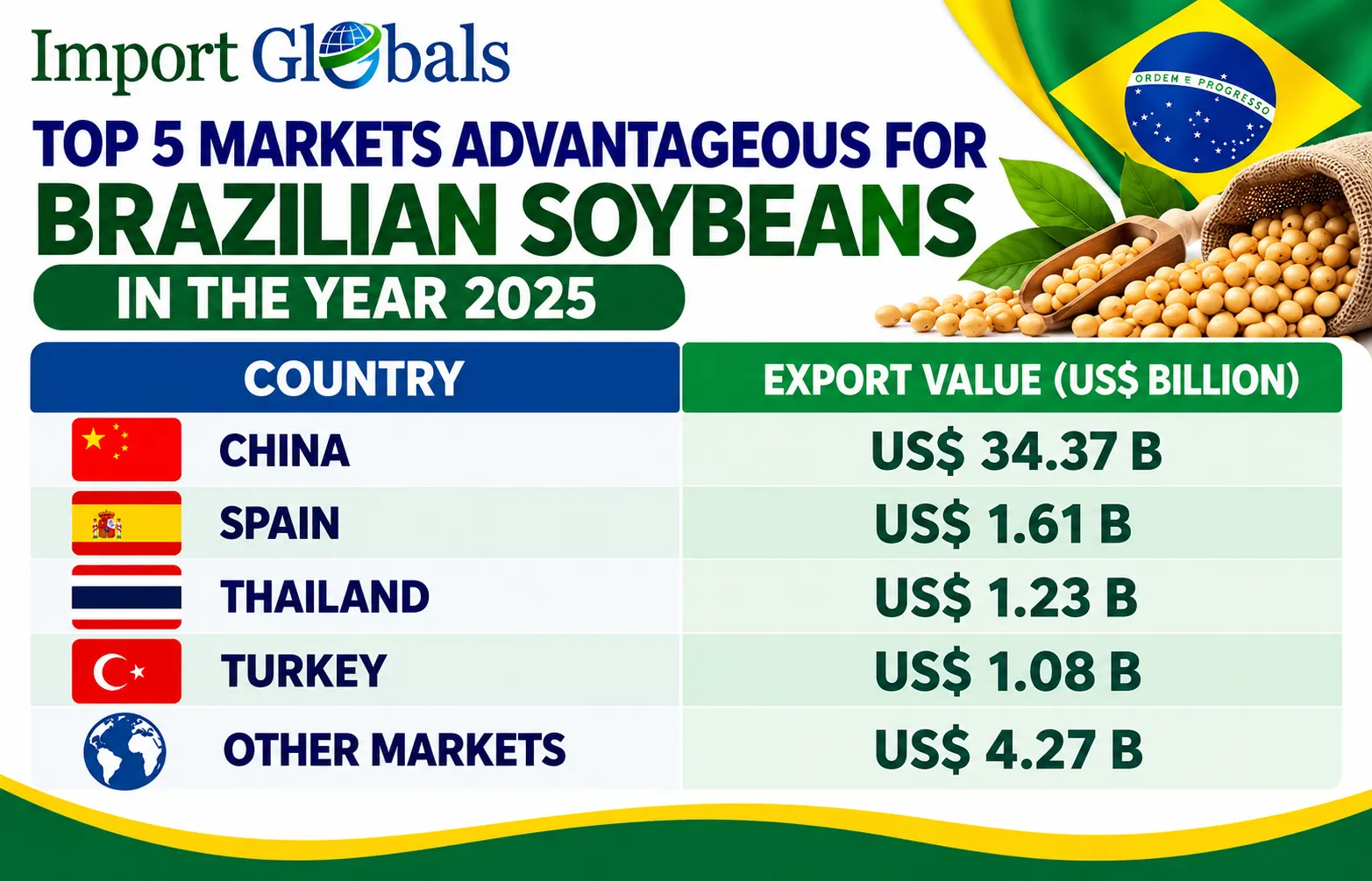
Brazilian soybean exports have reached a large number of international markets. However, China stands out as the most important one. Below mentioned are the top regional partners, as per Brazil Import Export Data,
1. China: Most Significant Market
China is the most important destination for Brazilian soybeans. From the information gathered from the trade statistics, it can be said that China purchased about 85.43 million tonnes of Brazilian soybeans in 2025. All this shows that there is a huge amount of soybean demand from the country, especially for livestock. The fact that China is the most significant market means that anything regarding the demand for soy (feed) in the country may affect Brazil's exports of soybeans.
2. Spain: Important European Destination
Spain is another European destination for Brazilian soybeans. According to the Brazil Export Trade data analysis done through the Brazilian government figures, in 2025 alone Spain will have purchased around 4 million tonnes of Brazilian soybeans.
3. Thailand - Emerging Asian Market
Thailand is another important player on the Asian market of Brazilian agricultural commodities. The demand for soybeans in this country is associated with the production of feed and livestock. Asian countries excluding China can allow Brazilian exporters to diversify their geographical risk and expand their client base.
4. Turkey – Important Foreign Market
Turkey is of great importance for the trade of soybeans and agricultural commodities in general. Its demand comes from the food and feed, oil-extraction, and livestock industries. The geographical position of Turkey between the European, Middle Eastern, and Asian markets also explains its relevance as an agricultural market.
5. Additional International Markets
Brazilian soybeans are exported to other markets located in Europe, Asia, and the Middle East.
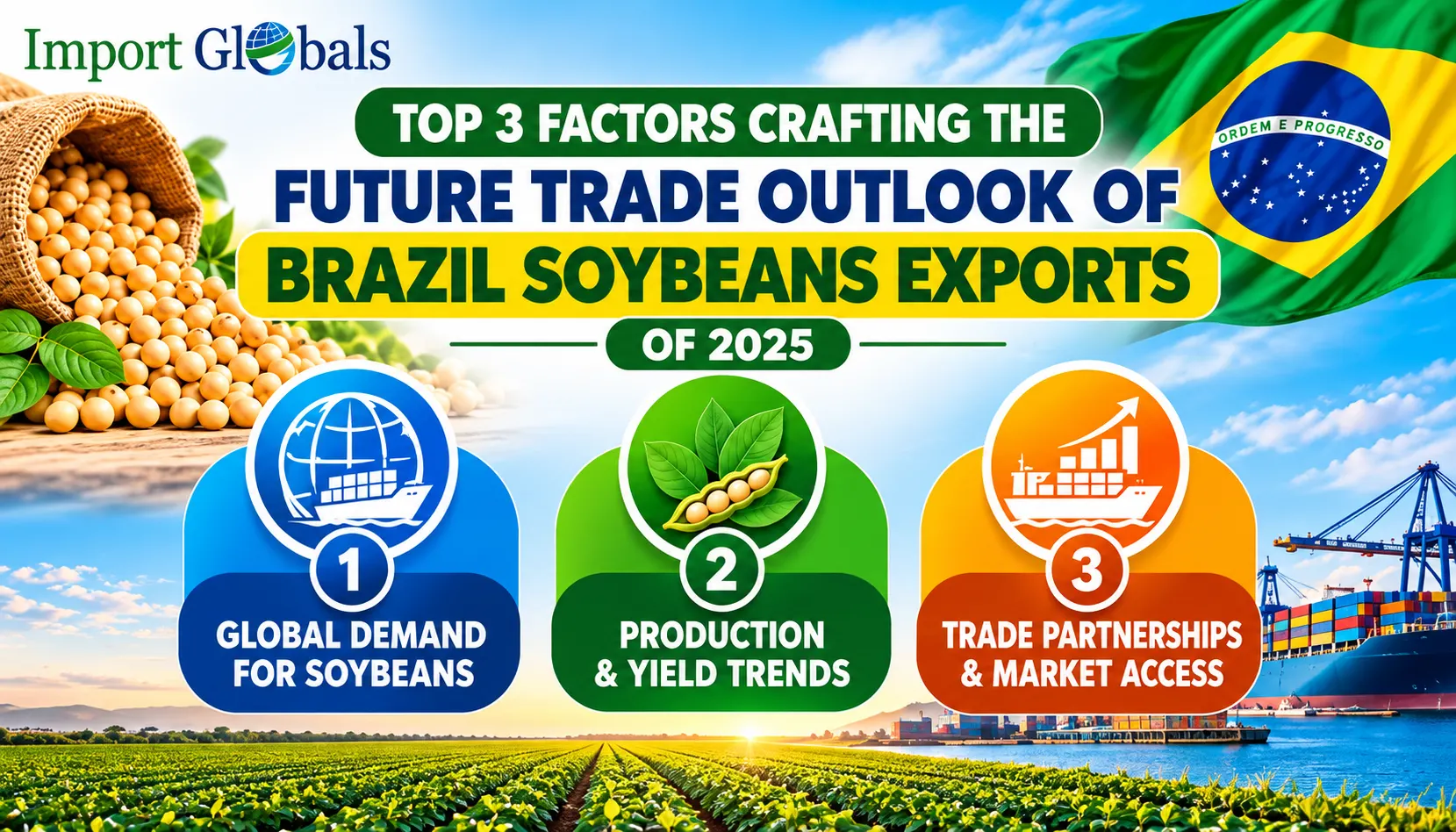
Top 3 Factors Contributing to Growth in Brazilian Soybean Exports in 2025
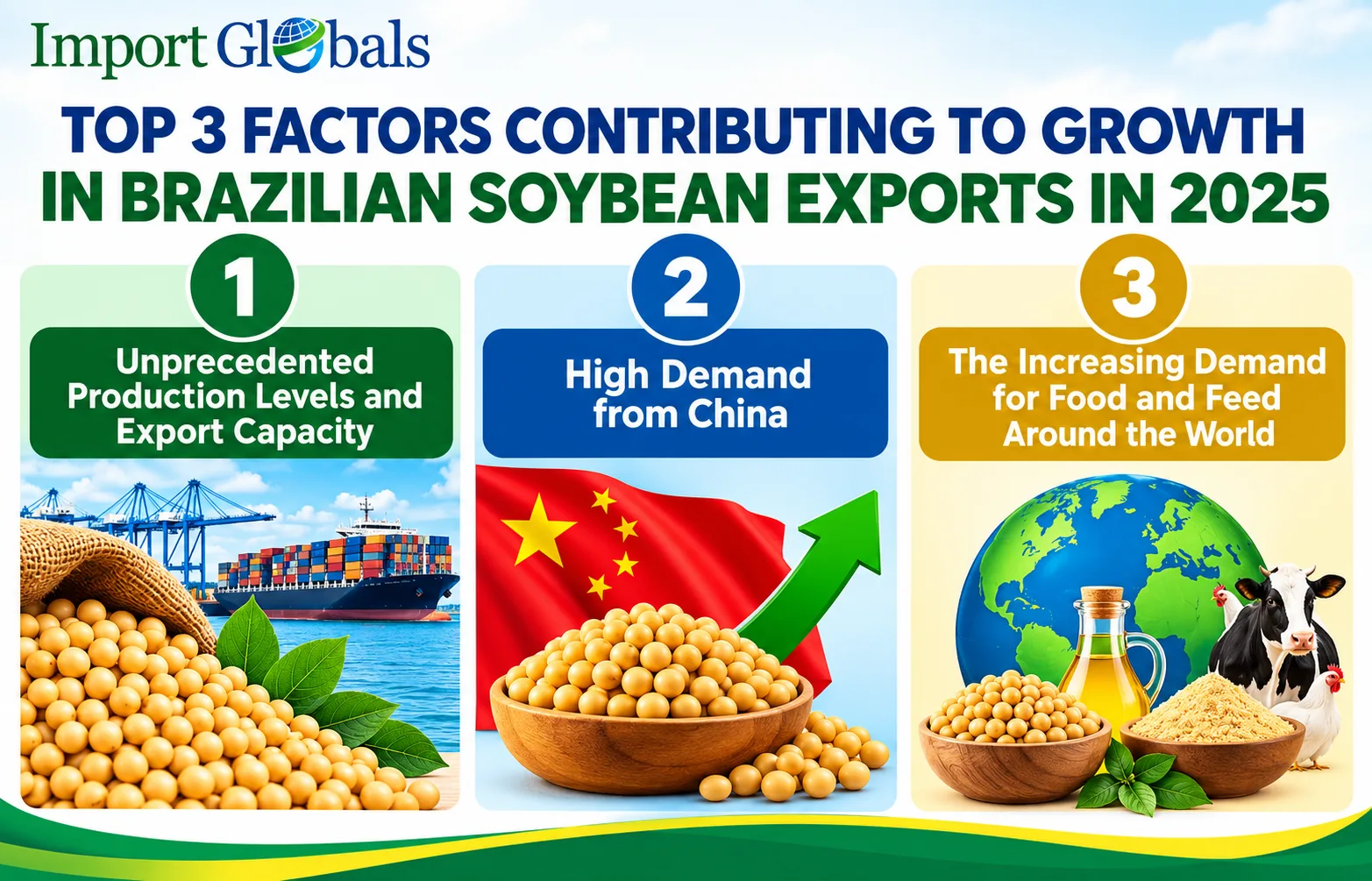
1. Unprecedented Production Levels and Export Capacity
Brazil’s growing agricultural production has influenced the expansion of soybean exports. Brazil Shipments Trade Data estimated soybean production for 2025 at about 169 million tons. The Brazilian government registered soybean exports amounting to 108.2 million tons in 2025.
2. High Demand from China
Demand from China is one of the key determinants of Brazil’s success in soybean exports. According to Brazil Trade Statistics, in 2025 China purchased 85.43 million tons of Brazilian soybeans, which constitutes about 80% of Brazil’s soybean exports. The size of this market allows Brazilian exporters to have a high level of demand and shows the necessity of having diversified international markets.
3. The Increasing Demand for Food and Feed Around the World
Soybeans are one of the important sources of both protein and vegetable oils; soy cakes are used in animal feed, while soy oil is used in the food industry, chemical engineering, and in biofuel production.
According to Brazil Import Customs Data, Brazilian soybean production and exports will continue to increase. In March 2025; it was reported that Brazil's soybean production would be equal to 173 million tonnes, while its estimated exports were 112 million tonnes for the 2025 marketing year.
Brazilian Soybean Exports to China
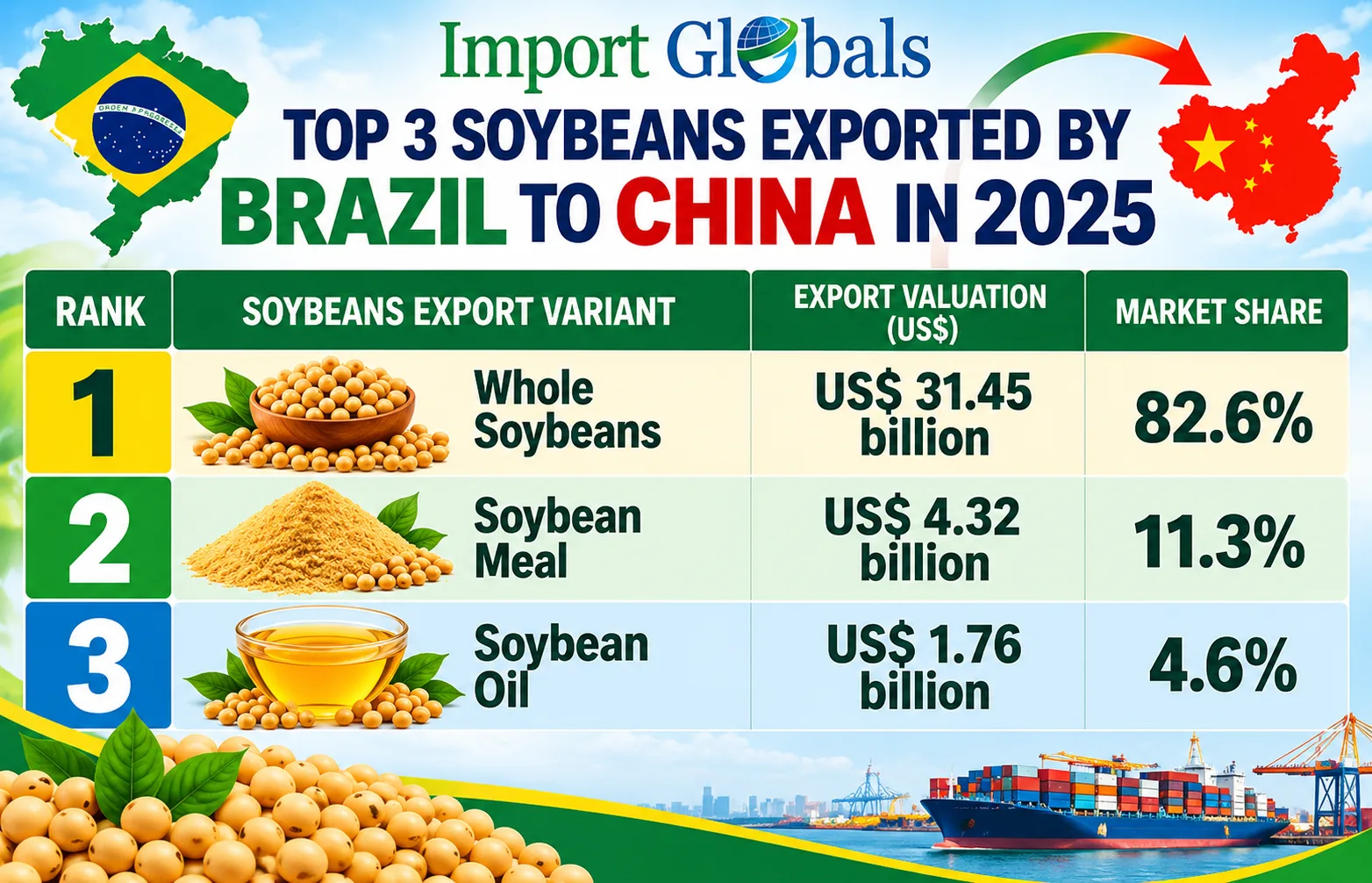
According to Brazil Export Data, Brazilian soybean exports to China totalled approximately 85.43 million tons in 2025, an increase from 72.56 million tons in 2024. This is significant because the livestock and animal feed industry in China is among the largest consumers of protein meal. In fact, soybean meal in China can be created from crushed soybeans, linking imports through soybeans to animal nutrition.
Thus, without doubt, China is amongst the most important export markets for Brazilian exports. However, while the abundance of exports can be beneficial for Brazilian traders, having all exports concentrated in one country is also a notable risk.
Brazilian Soybean Export Issues in 2025
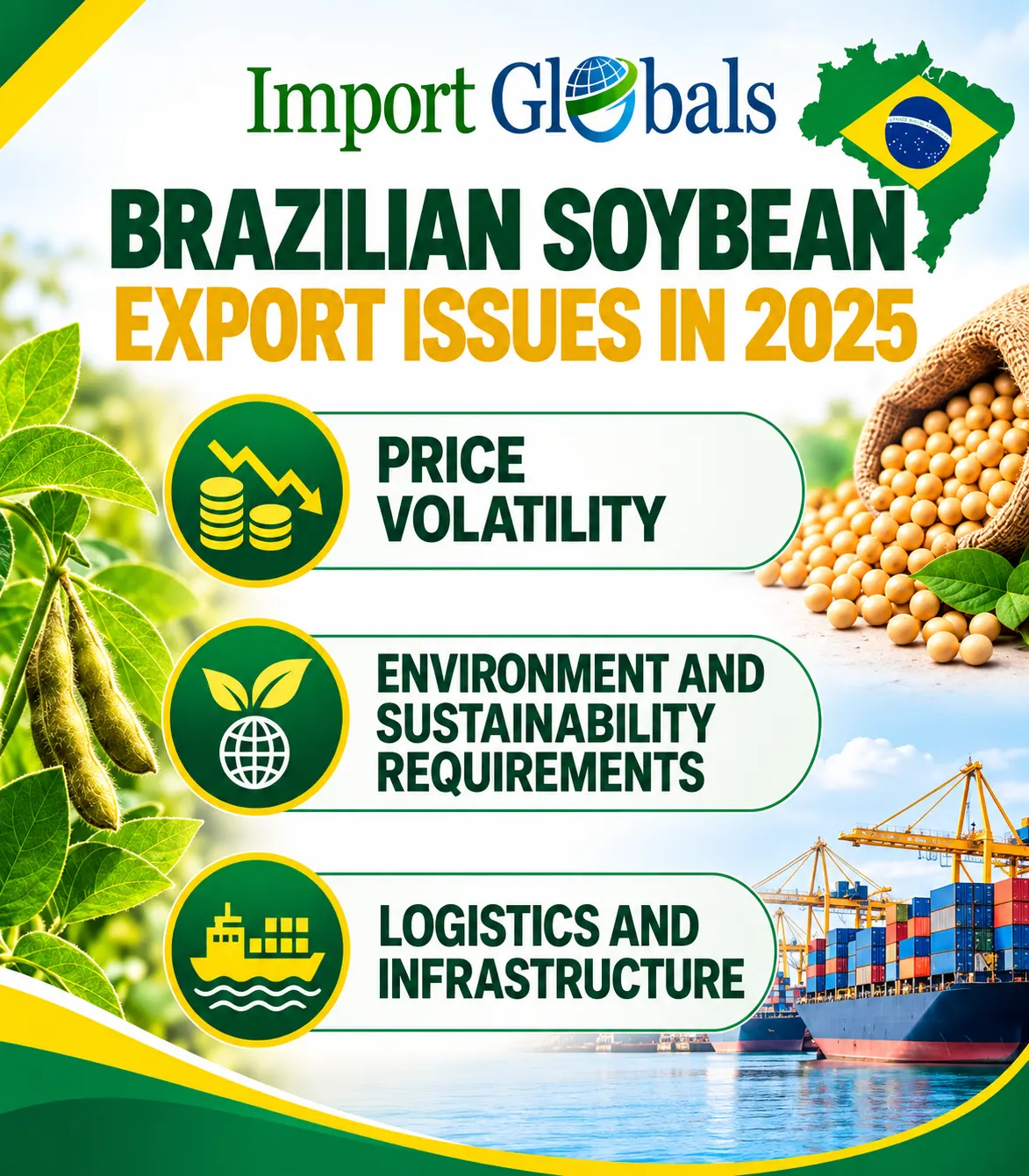
Price Volatility
International soybean prices are influenced by global production levels, stock levels, climatic conditions, the foreign exchange market, demand for soybeans, and trade policy issues. Brazil Trade Shipments Data show that the increase in the volume of soybeans exported by 9.5%. However, in monetary terms, Brazil's export revenues increased by 1.4%.
Environment and Sustainability Requirements
In recent times, environmental sustainability issues have been increasingly becoming important for agricultural exporters. USDA has pointed out that disputes regarding environmental issues and the future of the Brazilian Moratorium on soybeans could have an adverse impact on Brazil's sustainability credentials and future exports to the EU.
Due to this fact, exporters must pay more attention to:
- Traceability
- Requirements related to the use of land
- Standards of deforestation
- Sustainability certification
- Information proving the origin of goods
- Transparency of the supply chain
- Logistics and Infrastructure
Logistics and Infrastructure
Transportation over distances from the production area to ports may cause logistics problems. Issues of congestion during the harvesting period, transportation costs, storage capacity, and efficiency of ports may influence the capacity of exporters to deliver large amounts of soybeans in a timely and cost-efficient manner.
How Does Import Globals Help in Brazilian Soybean Exports?
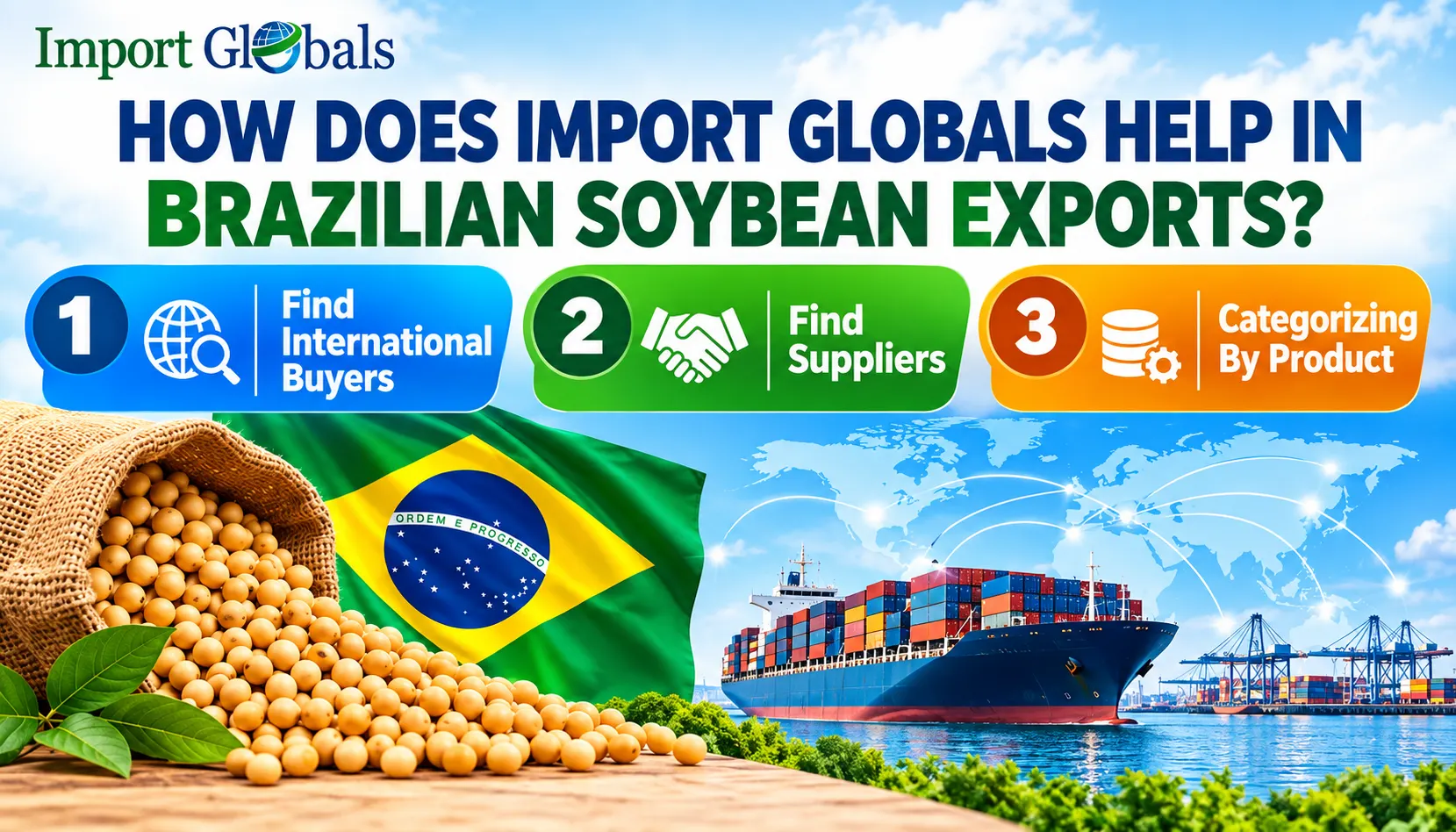
1. Find International Buyers
Import Globals is an effective tool for businesses looking to research different companies dealing in international imports of soybeans and find potential buyers based on the areas of import, products, and quantity of trade.
2. Find Suppliers
Businesses can utilize trade intelligence to assess market activity and countries involved in the soybeans supply chain to get an idea about the suppliers in international markets.
3. Categorizing By Product
Brazil Soybean Export Data can also provide information by category, HS Codes, country of shipment, quantity, value, shipment date, and other import information. This helps businesses in identifying certain markets in the soybeans industry.
Future Estimates of Brazilian Soybean Exports
The future of Brazilian soybean exports highly depends on the crop production increase, the global demand, logistics, commodity prices, and sustainability needs.
According to the Brazil Trade Customs Data, the Brazilian soybean output in 2025 is expected to be 173 million tonnes in comparison with the predicted 169.5 million tonnes in 2025. Furthermore, the same report states that soybean exports in 2026 will be equal to 112 million tonnes. The following Brazil Import Data update raised the prediction to 113 million tonnes, which means a growth of 3.7% against the marketing year 2025.
The following tendencies will play a significant role in the years to come:
- Increase in crop production
- Continuous demand from China
- Emergence of new export markets
- Growth in the processing of soybeans
- Rising demand for soybean meal
- Growth in the use of soy oil for biofuels
- Need and desire for sustainability and traceability
- Investments in infrastructure development in logistics
Conclusion
In 2025, Brazil’s soybean export sector recorded impressive results. The country exported roughly 108.2 million tons of soybeans, generating US$43.54 billion in revenue, and the volume of exports increased by 9.5% year on year. China was the main destination for Brazilian soybeans, importing around 85.43 million tons of the commodity. Other markets such as Europe and Asia also bought a significant amount of soybeans from Brazil.
The progress of the new soybean export industry will depend on factors such as the growth in production, the global demand for soybeans, logistics, the prices of commodities, the environmental requirements, and the diversification of clients by exporters.
Brazil Soybean Export Data will be useful to international traders as they will offer them valuable information regarding buyers, suppliers, commodity quantities, shipment destinations, and market dynamics. According to the reports of the Brazilian government, soybean exports brought $43.5 billion in 2025 and achieved 108.2 million tonnes of shipments.
CTA
If you are looking for the latest market updates on Brazil’s soybean trade, then you have finally landed on the right platform here. Import Globals has the special ability to provide detailed information on Brazil’s latest shipments. Subscribe to www.importglobals.com or drop an email at info@importglobals.com to get the latest updates on the Brazil Soybeans Trade to transform your global business growth.
FAQ’s
Que. What is the export trade value of soybean from Brazil in 2025?
Ans. The export trade value of soybean from Brazil in 2025 is US$43.54 billion.
Que. What is the soybean export amount of Brazil in 2025?
Ans. The total amount of soybeans exported from Brazil in 2025 is 108 million tonnes.
Que. What is the top export trade partner of Brazil for soybean in 2025?
Ans. China is one of the top export trade partner of Brazil in 2025.
Que. What is the average export price of soybeans in 2025?
Ans. The average export price of soybeans in 2025 is US$402.4 per tonne.
Que. How much has soybean export increased in 2025?
Ans. Soybean exports has reportedly increased by 9.5%.
Que. What are the top variants of soybean exported from Brazil in 2025?
Ans. Soybeans, soybean meal, soybean oil, and other processed soybean products are the top variants.
Que. How does Brazil import-export data support business growth?
Ans. Brazil import-export data supports business growth via proper identification of buyers, supplier analysis of market demand, and development of effective market expansion strategies.
Que. What information is available in Brazil Trade Data?
Ans. Brazil Trade Datacovers Importer names, Exporter names, Shipment date, HS Code, Product Details, quantity, values, pricing information, origin country, importing country & port details.
Que. How frequently is the Brazil Trade Data updated?
Ans. Brazil Trade Data is updated on a monthly basis.
Que. Where can you obtain detailed information on Brazil Trade Data?
Ans. Visit www.importglobals.com or email at info@importglobals.com for detailed updates on Brazil Trade data.
You Can Also Visit :-